


Why Revenue Software Implementation Fails: Key Pitfalls

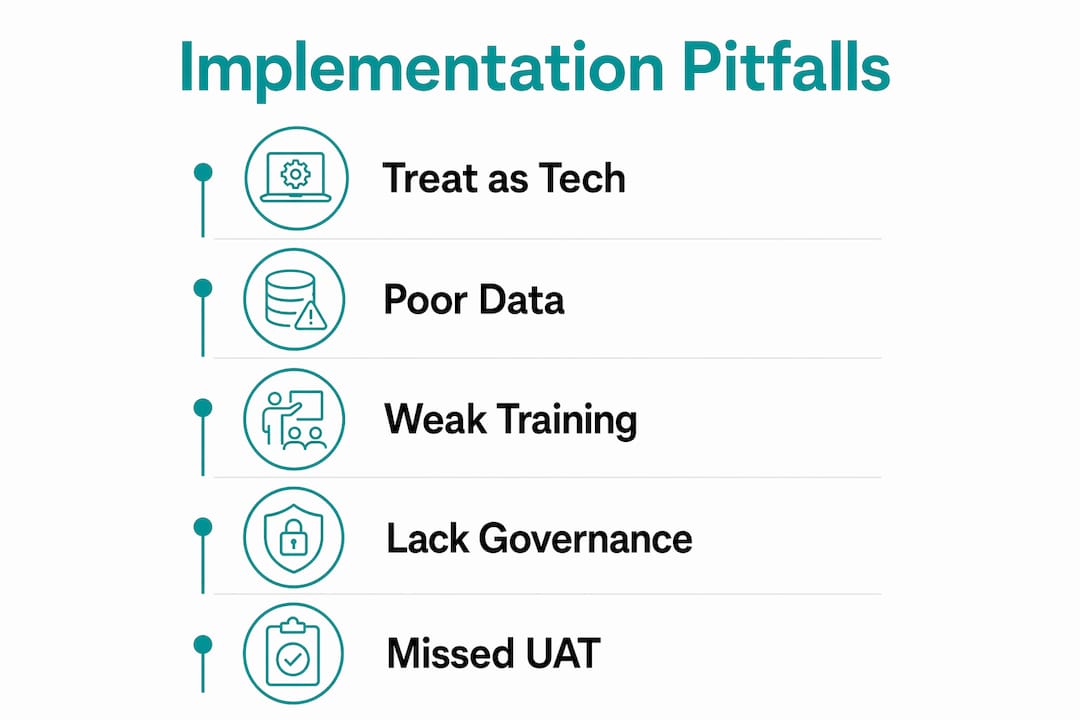
Revenue management software implementation fails when organizations treat it as a technology installation rather than a business transformation. That distinction is not semantic. Projects focused solely on software installation incur 40% higher costs due to unplanned work after launch. The gap between what the software can do and what the team actually uses it for is where revenue gets left on the table. Understanding why revenue software transitions fail, and what to do about it, is the difference between a system that pays for itself and one that collects dust.
Why does revenue software implementation fail?
The root cause is a category error. Most operators buy software expecting it to solve a business problem on its own. It cannot. Software is a decision-support tool. It surfaces pricing signals, flags lease expiration risk, and models demand. But it does not replace the judgment, governance, or process discipline that turns those signals into better outcomes.

CFO frameworks identify four recurring causes of implementation failure: misaligned scope, underestimated change adoption, governance gaps, and treating go-live as a finish line. Each of these is a business problem, not a technology problem. The software vendor cannot fix any of them for you.
The most common operational and strategic failure causes break down into four categories:
No executive sponsor. Without a named leader accountable for outcomes, decisions stall. Scope expands without discipline. Teams default to their old workflows because no one is holding them to the new one.
Misaligned business requirements. When the implementation team defines requirements based on what the software does rather than what the business needs, the configuration drifts away from real operating conditions.
Uncontrolled scope creep. Scope creep without an executive sponsor produces bloated, confusing software that users reject. Every added feature request that bypasses a formal change process increases the risk of a failed launch.
Conflicting departmental priorities. Leasing, operations, and asset management often have different definitions of success. Without cross-functional alignment before configuration begins, the system ends up serving no one well.
Pro Tip: Assign a single internal owner to the implementation before the vendor kicks off. That person should have the authority to say no to scope additions and the access to escalate decisions to leadership.
How does poor data quality cause implementation failure?
Data problems are the most underestimated risk in any revenue software project. Poor legacy data quality causes 20%–30% of implementation failures because dirty data migrates into the new system and replicates the same errors at scale. The software then produces outputs that operators do not trust, and adoption collapses.
The most common data issues in multifamily revenue management projects include duplicate unit records, inconsistent floor plan naming conventions, orphaned lease records, and missing or misclassified amenity premiums. Each of these creates noise in the pricing model. The system cannot price accurately when it does not know what it is pricing.
The real estate data quality challenge is not new, but it is consistently underestimated during implementation planning. Teams assume the property management system data is clean because it is live. Live data and clean data are not the same thing.
Data Issue | Downstream Impact |
Duplicate unit records | Inflated inventory counts, mispriced availability |
Inconsistent floor plan names | Broken comparables, unreliable demand signals |
Orphaned lease records | Inaccurate occupancy reporting |
Missing amenity premiums | Underpriced units, lost revenue per lease |
Misclassified unit types | Faulty pricing tiers, incorrect renewal offers |
Cleansing data before migration is not optional. Audit your property management system records at least 60 days before go-live. Standardize naming conventions across your portfolio. Validate occupancy figures against physical counts. These steps take time, but they cost far less than rebuilding trust in a system that launched on bad data.
Pro Tip: Treat your data audit as a separate workstream with its own timeline and owner. Do not let it get absorbed into the general implementation schedule, where it will always be deprioritized.
Why do change management and training fail in revenue software projects?
The adoption gap is the most expensive problem in revenue software implementation, and it is almost entirely a people problem. Teams not trained on the rationale behind pricing algorithms show significantly lower adoption rates. Property managers who do not understand why the system recommends a specific rent will override it manually. Over time, those overrides become the default, and the software becomes a reporting layer rather than a pricing engine.
Training programs that focus on how to click through the software miss the point. The more important question is why the system is making a specific recommendation. When your team understands the demand signals, lease expiration curves, and market comp logic behind a price, they can evaluate the recommendation intelligently. That is the difference between a team that uses the software and a team that trusts it.
Inadequate change management, poor data migration, and inexperienced teams account for over 75% of ERP failures, and all of them are preventable. The change management piece includes communication plans, stakeholder engagement, and a clear narrative about what changes for each role after go-live.
Effective stakeholder engagement before launch includes:
Briefing leasing teams on how pricing recommendations are generated and what inputs drive them
Giving asset managers visibility into the governance model so they understand how overrides are tracked
Holding working sessions with operations leadership to map current workflows to new ones
Documenting who approves pricing exceptions and what the escalation path looks like
Skipping or compressing User Acceptance Testing is one of the fastest ways to create a post-launch support crisis. UAT is not a technical checklist. It is a business readiness process. Your leasing team should be running real scenarios through the system before go-live, not learning on live data after it.
What governance practices sustain revenue software success?
Go-live is not the finish line. The organizations that get lasting value from revenue software treat the post-launch period as the beginning of the real work. That means building governance structures that keep the system calibrated, the team accountable, and the outputs trustworthy.
Successful operators treat revenue software as a decision-support tool with human oversight rather than a black box that runs on autopilot. Algorithmic suggestions become one input among many, reviewed weekly by a named owner who understands the asset context. That shift from passive acceptance to active governance is what separates high-performing portfolios from ones that plateau after launch.
The manual-reliability threshold sits at roughly 50 units per property manager. Above that workload, reactive tasks crowd out proactive revenue work. Software helps, but only if the governance model gives managers the time and authority to act on what the system surfaces.
Governance practices that sustain implementation success include documented pricing rationale for every override, a weekly revenue review cadence with a standing agenda, clear escalation paths for pricing exceptions, and cross-functional reporting that gives asset management visibility into leasing decisions. These are not complicated. They are consistent. Consistency is what makes the difference between a system that degrades over time and one that improves.
For operators shopping for new revenue management software, building the governance model before selecting a platform is the right sequence. Know how you will use the system before you commit to which one you buy.
Key Takeaways
Revenue software implementation fails when organizations skip the business transformation work and treat the project as a technology installation.
Point | Details |
Treat it as transformation | Software installation without process change produces 40% higher costs and lower adoption. |
Clean data before migration | Poor data quality causes 20%–30% of failures; audit records at least 60 days before go-live. |
Train on the “why,” not just the “how” | Teams that understand pricing rationale trust the system and override it less often. |
UAT is a business readiness check | Compressed testing creates post-launch crises; run real scenarios before go-live. |
Governance sustains the investment | Weekly review cadence, documented overrides, and executive visibility keep the system performing. |
What I’ve seen break implementations that looked fine on paper
The projects I have watched fail most often looked perfectly organized at kickoff. The vendor was engaged, the timeline was set, and the project plan was detailed. What was missing was a clear answer to one question: who owns this after go-live?
Without that answer, implementations drift. The vendor wraps up their deliverables and moves on. The internal team, still learning the system, defaults to old habits. Overrides accumulate without documentation. The weekly review cadence never gets established because no one scheduled it. Within six months, the software is running in the background while the team prices manually.
The other pattern I see consistently is underinvestment in the “why” conversation with leasing staff. Operators spend weeks configuring the system and hours training on navigation. They spend almost no time explaining to the people entering the building every day why the system is recommending a specific price. That gap creates distrust fast. A leasing agent who does not understand a recommendation will not follow it, especially when a prospect is standing in front of them.
The fix is not complicated. It requires leadership that treats implementation as a change initiative, not a software project. It requires a governance model that is documented before launch, not built after problems emerge. And it requires a willingness to invest in revenue management best practices as an ongoing operational discipline, not a one-time setup task.
Software is a tool. The strategy lives in the people, the process, and the decisions made every week.
— Joani Schumaker
How The Revenue Method supports implementation success
The Revenue Method works with multifamily operators, owners, and asset managers who want to get real value from their revenue software, not just have it running.
The advisory work covers software selection, implementation support, data readiness, team training, and post-launch governance. The Revenue Method is certified across six revenue management platforms and independent from every software vendor it evaluates. That independence matters when you need honest guidance on configuration, not a vendor’s preferred setup. Whether you are mid-implementation and losing confidence or preparing to select a platform, multifamily revenue advisory from The Revenue Method gives you the operational context and process discipline to make the investment work.
FAQ
What is the top reason revenue software implementations fail?
Treating the project as a technology installation rather than a business transformation is the leading cause. Projects focused only on software setup incur 40% higher costs due to unplanned post-launch work.
How does data quality affect revenue software adoption?
Poor legacy data quality causes 20%–30% of implementation failures. Dirty data migrates into the new system, produces unreliable outputs, and erodes team trust in the software’s recommendations.
Why do property managers override revenue software recommendations?
Teams not trained on pricing rationale revert to manual overrides because they do not understand why the system made a specific recommendation. Training on the logic behind the algorithm, not just the interface, reduces this pattern.
What does good post-launch governance look like?
Good governance includes a weekly revenue review cadence, documented pricing overrides, a named internal owner, and cross-functional reporting that keeps asset management informed. These practices keep the system calibrated and the team accountable.
When should UAT happen in a revenue software project?
User Acceptance Testing should happen before go-live, with real leasing scenarios run by the actual users. Compressing or skipping UAT creates post-launch support crises and long-term adoption problems.
Recommended

Comments